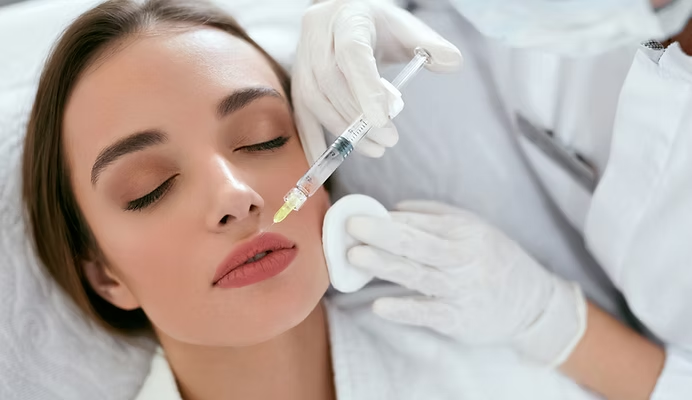
Everything you need to know about the recovery timeline, what each stage looks like, and how to protect your investment from day one.

You booked your appointment, chose a conservative approach, and asked your injector for something natural. Smart move. A half-milliliter of filler is one of the most popular volumes requested today precisely because it delivers a genuine enhancement without overstatement. Still, the first time you look in the mirror after treatment, the swelling often tells a very different story, and that gap between expectation and reflection sends a lot of people into unnecessary panic.
This guide exists to close that gap. Below, you will find a clear, day-by-day breakdown of the 0.5 ml lip filler swelling stages, honest advice on what normal looks like versus what warrants a call to your provider, and practical aftercare tips that protect your results. Whether you are preparing for your first treatment or supporting a client as a professional sourcing dermal fillers, the information here applies directly to you.
Why 0.5 ML Is the Gold Standard for First-Time Lip Augmentation
Most aesthetic guidelines and clinical practice patterns agree that 0.5 ml is the ideal starting volume for lips. According to a consensus published by practitioners in the Aesthetics Journal, starting conservatively allows the injector to assess how a patient’s tissue responds before adding more. For naturally thin lips, this volume adds a soft, plump edge. For lips with moderate volume already, it restores the Cupid’s bow definition lost to aging or weight fluctuation.
The product most commonly chosen for this treatment is a hyaluronic acid (HA) filler, such as those available in the Juvederm or Restylane ranges. HA fillers are reversible with hyaluronidase, integrate naturally into tissue, and carry a well-established safety profile when administered correctly. That combination makes them the go-to choice for subtle lip augmentation worldwide.
The 0.5 ML Lip Filler Swelling Stages: A Day-by-Day Timeline
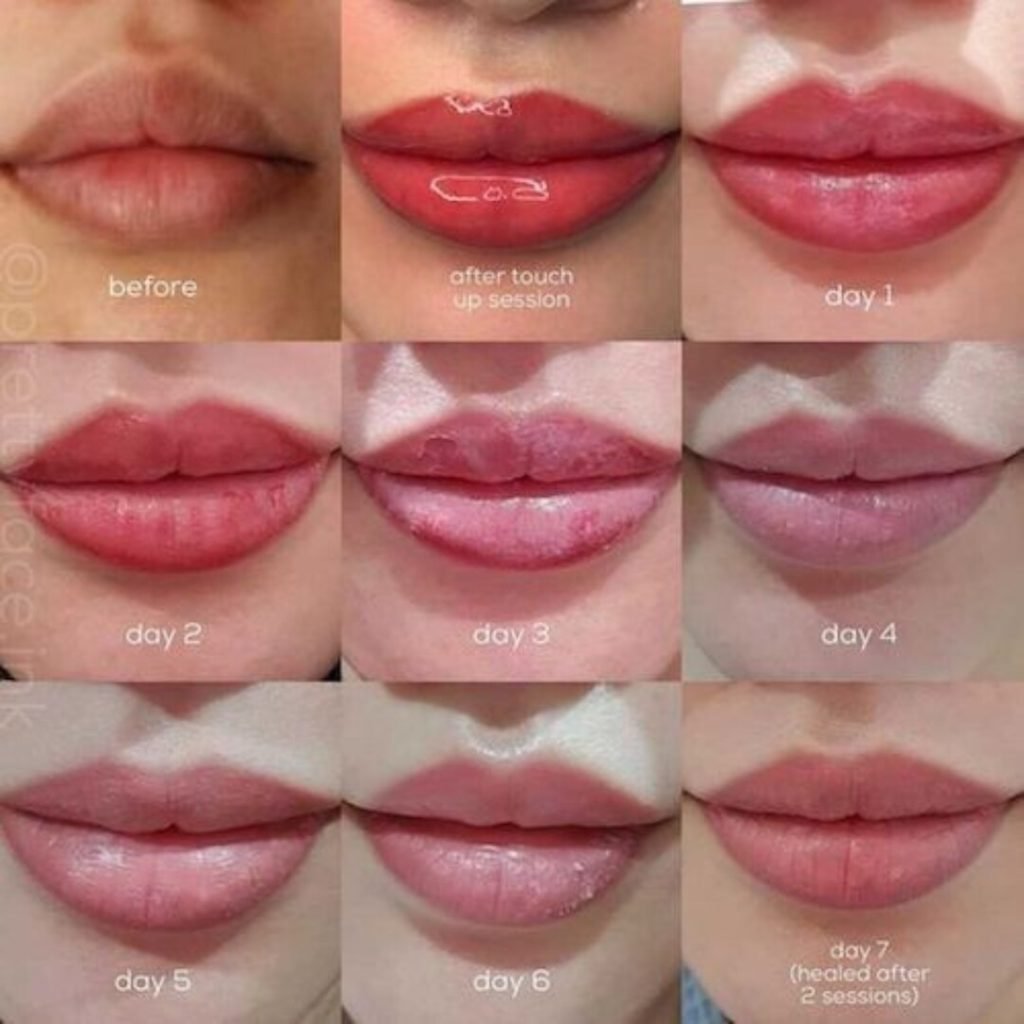
Swelling after lip injections follows a predictable arc. The timeline below reflects what most patients experience after a standard 0.5 ml treatment with an HA-based product. Individual variation exists, but the general pattern is consistent.
| Stage | Timeframe | What You See | What to Do |
|---|---|---|---|
| Stage 1 | Hours 1–6 | Immediate puffiness, possible pinpoint bruising, lips feel tight | Apply a clean cold compress, avoid touching lips |
| Stage 2 | Day 1–2 | Peak swelling — lips appear significantly larger than intended result | Stay hydrated, sleep with head elevated, avoid heat |
| Stage 3 | Day 3–5 | Swelling begins to reduce, shape starts to emerge, bruising may peak | Continue cold compresses, avoid strenuous exercise |
| Stage 4 | Day 6–10 | Most swelling resolved, lips feel softer, true shape becoming visible | Resume normal activity, avoid lip massages unless advised by provider |
| Stage 5 | Day 10–14 | Final result settles; filler integrates fully with tissue | Schedule a follow-up assessment if desired, consider top-up options |
Pro tip: Take photos in consistent lighting from day one. The visual record helps you track progress accurately and avoid the common mistake of judging results too early in the swelling stages.
Why Swelling Happens and What Drives Its Severity
The lips are one of the most vascular areas of the face. When a needle or cannula enters the tissue, the body triggers an inflammatory response — and that response is entirely normal. Hyaluronic acid is also hygroscopic, meaning it naturally attracts and binds water molecules. In the first 24 to 48 hours, the filler absorbs surrounding fluid as it settles, which amplifies swelling beyond the actual volume injected.
Several factors influence how much swelling a person experiences:
- Injection technique — a slower, more deliberate approach with a cannula tends to cause less trauma than a sharp needle technique
- Placement depth — superficial injections into the vermilion border cause more visible swelling than deeper placements
- Individual biology — those who bruise easily or take blood-thinning supplements often swell more
- Hydration levels — well-hydrated patients tend to resolve swelling faster
- Product choice — softer, lower-viscosity HA fillers integrate with less initial trauma
According to the National Library of Medicine, post-injection edema from HA fillers typically peaks within 24 to 48 hours and resolves substantially within two weeks in the majority of patients. That data aligns directly with the stages outlined above.
Aftercare Practices That Protect Your Results
Good aftercare does not speed up biology, but it absolutely prevents complications that extend recovery. These are the instructions most experienced injectors give their patients, and following them closely makes a noticeable difference in how clean the final result looks.
What to Do After Treatment
- Apply a clean, wrapped ice pack to the lips for 10-minute intervals during the first 6 hours
- Drink plenty of water to support tissue recovery and HA integration
- Sleep on your back with your head elevated on the first night
- Use a gentle, fragrance-free lip balm to prevent dryness as the skin adjusts
- Schedule your two-week follow-up appointment before you leave the clinic
What to Avoid
- Avoid alcohol for at least 24 hours, as it dilates blood vessels and increases bruising
- Skip intense exercise for 48 hours to keep blood pressure and inflammation low
- Do not apply makeup directly to the injection sites for at least 12 hours
- Avoid extreme heat — saunas, hot yoga, and direct sun exposure delay recovery
- Do not press or manipulate the lips; let the filler settle on its own
Swelling Versus Complication: Knowing the Difference
Normal swelling is symmetrical, soft to the touch, and gradually reduces over the two-week period. A complication presents differently. Seek prompt assessment from your provider if you notice any of the following:
- Severe pain that worsens after day two rather than improving
- White or bluish discoloration anywhere on or around the lip, which signals possible vascular compromise
- Swelling that continues to increase after day three
- Fever, heat, or spreading redness beyond the treatment area
- Hard lumps that feel firm rather than soft and gel-like
Vascular complications, though rare, are the most serious risk associated with lip injections. Early identification and treatment with hyaluronidase are critical. This is one of the primary reasons professional training and high-quality product sourcing matter so much in aesthetic practice.
Choosing the Right Filler Product for Subtle Lip Augmentation

Not all HA fillers perform identically in the lips. The lips require a product with a low to moderate viscosity, enough cohesivity to hold shape, and a smooth enough consistency to avoid lumpiness in such a mobile, expressive area. Below are some of the most clinically respected options for lip work:
| Product | Key Property | Best For |
|---|---|---|
| Juvederm Volbella | Ultra-soft, Vycross technology | Subtle definition, fine lines |
| Restylane Kysse | XpresHAn flexibility | Natural movement, volume |
| Belotero Soft | Polydensified matrix | Integration, reduced lumpiness risk |
| Teosyal RHA Kiss | Resilient HA, adapts to movement | Dynamic lips, long-lasting result |
Each of these products addresses the unique demands of lip tissue. When practitioners choose the right formulation for the right patient, the swelling resolves more cleanly and the final result looks more integrated with the surrounding anatomy.
For professionals who need a reliable source of premium aesthetic products, Filler Supply Store offers authentic fillers from globally recognised manufacturers. The ordering process is straightforward, and guidance on procurement is available through the How To Buy page.
What Happens After the Swelling Resolves: Long-Term Expectations
Once the two-week mark passes, most patients describe their lips as feeling natural — soft, balanced, and proportionate. A 0.5 ml result typically lasts between six and twelve months, depending on the product used, the patient’s metabolism, and how active the lip musculature is. Faster-metabolising patients often find that a consistent treatment schedule of two appointments per year maintains their preferred look most effectively.
Over time, repeated careful treatments also contribute to a healthier lip environment. HA fillers stimulate collagen production in surrounding tissue, which helps the lips retain a slightly improved baseline volume even between sessions. This is a genuinely positive long-term benefit of choosing hyaluronic acid lip injections over permanent alternatives.
If you are an aesthetic professional looking to stock your clinic with the products your patients trust, browse the full range at our shop and review our shipment policy for delivery timelines and order specifications.
The 0.5 ml lip filler swelling stages are a temporary part of a process that leads to a genuinely beautiful, natural-looking outcome. Understanding what to expect at each stage removes anxiety from the equation and lets you focus on the result you are working toward. Whether you are a first-time patient, a seasoned aesthetic enthusiast, or a practitioner guiding clients through their recovery, the key is the same: trust the timeline, follow the aftercare, and give the product two full weeks to settle before drawing any conclusions.
For questions about products, sourcing, or placing an order, the team at Filler Supply Store is ready to help. Quality products paired with informed patients and skilled practitioners produce outcomes worth every stage of the process.