What does Botox actually do to forehead lines and crow’s feet? This guide walks you through the science, the realistic results, and everything you need to feel informed and confident before your first treatment.
You have probably noticed more forehead lines in photos lately, or those fine creases at the corners of your eyes that deepen every time you smile. These are two of the most common concerns that bring people to an aesthetic clinic for the first time. Botox consistently delivers some of the most dramatic, reliable, and well-documented wrinkle reduction results for both areas. Before you book an appointment, though, you deserve a full, honest picture of what to expect.
This guide covers everything from how Botox works on forehead lines and crow’s feet, to what real botox before and after transformations look like at each stage of treatment.
How Botox Actually Works on Dynamic Wrinkles
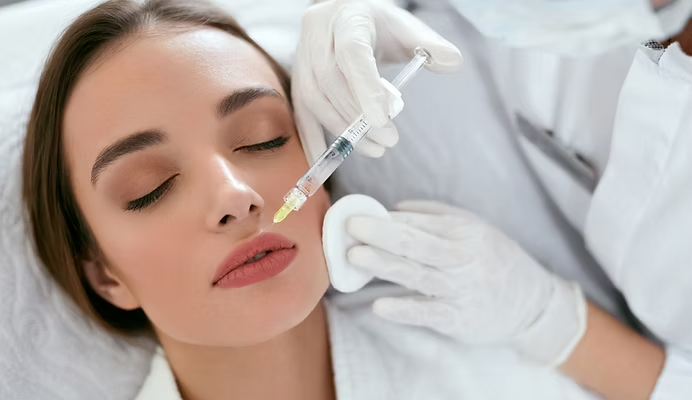
Botox is the brand name for botulinum toxin type A, a purified neuromodulator that temporarily interrupts the signal between a nerve and its target muscle. When a licensed practitioner injects small, precise doses into the forehead or around the eyes, the treated muscles relax and stop contracting as forcefully. The skin above those muscles then smooths out.
According to the American Academy of Dermatology, Botox is most effective on dynamic wrinkles: lines that form from repeated facial movement rather than sun damage or volume loss alone. Forehead lines and crow’s feet fall squarely in this category, which is why the botox before and after contrast in these two areas tends to be so clear.
At Filler Supply Store, you can browse authentic, licensed Botox products sourced from reputable manufacturers, giving practitioners access to the same trusted formulas used in top clinics worldwide.
Botox Before and After for Forehead Lines

Horizontal forehead lines develop from years of raising your eyebrows in surprise, concentration, or expression. They start as faint creases in your twenties and grow more pronounced with each decade. Once static wrinkles set in at rest, they stay visible even when your face is completely relaxed.
What the Before Looks Like
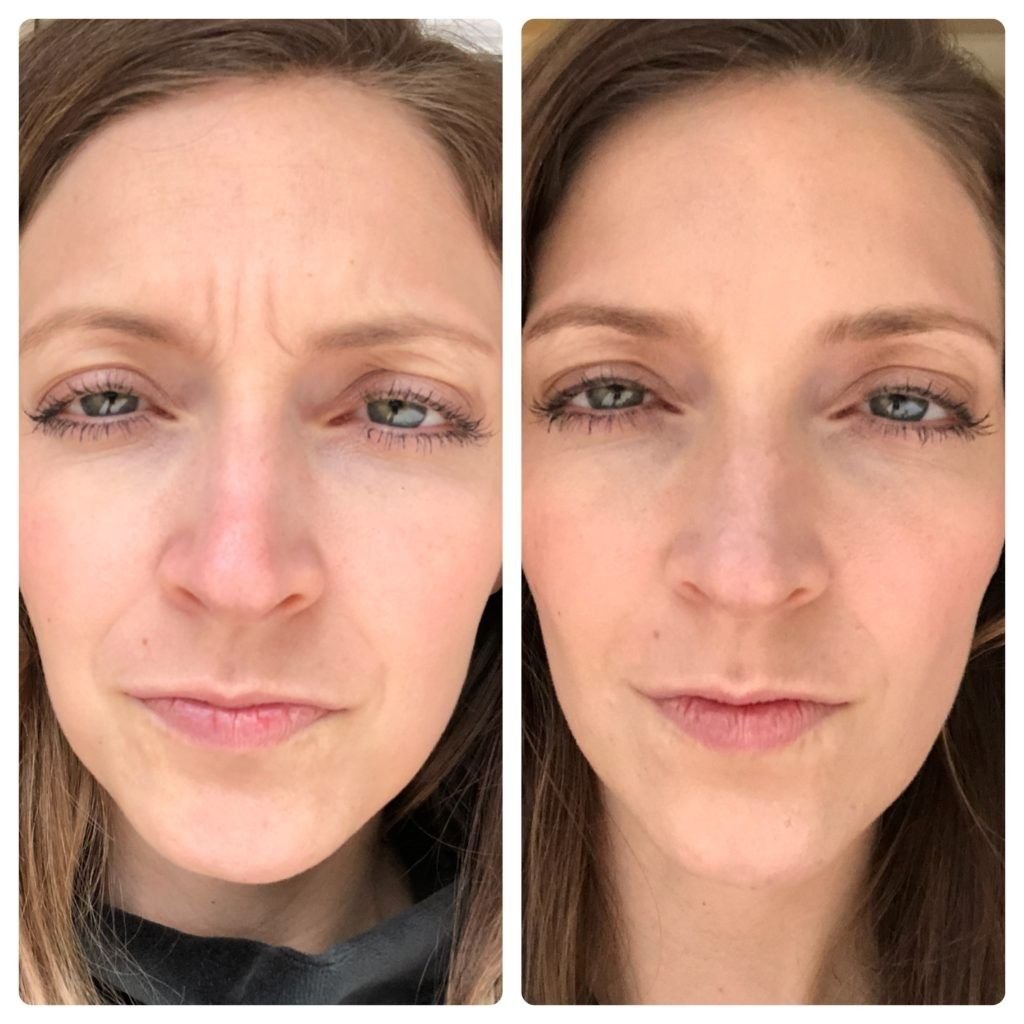
Before forehead line treatment, most patients present with one to four horizontal lines running across the upper forehead. These lines appear at rest and deepen noticeably during any upward brow movement. Skin texture looks rougher along those creases, and in some cases the lines have a slight shadow effect in certain lighting.
What the After Looks Like
Results typically start showing within three to five days and reach their full effect at the two-week mark. After treatment, the forehead appears smoother and more rested. The lines soften significantly, though extremely deep static lines may still show a faint trace at rest. Most patients report that their forehead looks naturally refreshed rather than frozen, particularly when the injector uses a conservative, anatomically precise dosage.
| Timeline | What You Notice | Typical Experience |
|---|---|---|
| Days 1–3 | No visible change | Possible mild redness at injection sites |
| Days 3–5 | Slight softening begins | Forehead movement starts to feel lighter |
| Days 7–14 | Full effect visible | Lines significantly reduced, skin smoother |
| Months 3–4 | Results begin to fade | Muscle movement gradually returns |
| Month 4–6 | Return to baseline | Repeat treatment recommended |
Botox Before and After for Crow’s Feet
Crow’s feet are the fan-shaped lines that radiate from the outer corners of the eyes. They develop from decades of squinting and smiling, two of the most frequent facial movements a person makes daily. The skin around the eyes is also notably thinner than the rest of the face, making it especially prone to early wrinkling.
Crow’s feet improvement through Botox is one of the most consistently satisfying treatments in aesthetic medicine. Injectors target the orbicularis oculi muscle, the ring-shaped muscle surrounding the eye, with three to four small injection points per side. The result is a softer, more open appearance around the eyes without altering natural expression.

According to a clinical review published on PubMed Central, Botox injections in the periorbital area (around the eyes) produce statistically significant improvement in crow’s feet severity and are among the most well-tolerated cosmetic procedures performed today. The cosmetic injection outcomes in this zone are highly predictable when performed by trained practitioners.
How Long Do Results Actually Last?
This is the question nearly every new patient asks. Results from a single Botox session for both forehead lines and crow’s feet generally last between three and six months. Several factors influence where on that spectrum your results fall:
- Muscle mass and activity: More active or stronger muscles metabolize the product faster.
- Dosage used: Higher doses within safe limits tend to extend duration.
- Metabolism rate: A faster metabolic rate shortens the longevity of effects.
- Treatment frequency: Regular treatments over time often lead to longer-lasting results as muscles gradually weaken.
- Sun exposure and lifestyle: UV damage and smoking accelerate the return of dynamic wrinkles.
With consistent treatment every three to four months, many patients notice that lines become less severe even before their follow-up appointment, as the muscle gradually responds to repeated relaxation cycles.
What Makes a Good Candidate for Forehead and Eye Area Botox?
“The ideal candidate is someone with dynamic wrinkles that move with expression. If you see the lines form when you raise your brows or squint, Botox addresses the root cause directly.”
Most healthy adults between their late twenties and their sixties respond well to forehead and crow’s feet treatment. Preventive Botox in the early thirties has gained traction precisely because starting earlier keeps lines from deepening into static wrinkles. That said, a few factors call for a conversation with your provider first:
- Pregnant or breastfeeding individuals should postpone elective Botox.
- Those with neuromuscular conditions (such as myasthenia gravis) require specialist clearance.
- Anyone with known hypersensitivity to botulinum toxin or any formulation component should not proceed.
- Active skin infections or inflammation at injection sites require resolution before treatment.
For patients whose primary concern is volume loss or deep static lines rather than movement-related wrinkles, combining Botox with a dermal filler from a trusted source often delivers a more complete cosmetic outcome.
What to Expect During and After Your Treatment
The Procedure Itself
A typical forehead and crow’s feet Botox session takes between ten and twenty minutes. Practitioners cleanse the skin, mark injection points, and administer small amounts of product using an ultra-fine needle. Most patients describe the sensation as a brief pinch. No recovery time or downtime is required afterward.
Immediate Post-Treatment Care
After treatment, practitioners generally recommend staying upright for four hours and avoiding vigorous exercise for the rest of the day. Avoiding facials, hot yoga, or any activity that dramatically raises skin temperature for 24 to 48 hours helps ensure the product stays precisely placed. Minor redness or tiny bumps at injection sites resolve within an hour for most people.
Following Up and Assessing Results
A two-week follow-up appointment gives your provider the chance to assess the full effect and address any asymmetry with a small touch-up dose if needed. This follow-up is an important part of achieving ideal cosmetic injection outcomes, especially for first-time patients whose muscle response the provider is calibrating.
Combining Botox with Complementary Aesthetic Treatments
For many patients, the most satisfying results come from pairing Botox with other treatments that address different layers of the aging process. Botox handles dynamic muscle movement. Fillers restore lost volume. Skin-quality products address texture, hydration, and collagen support.
Explore options such as Juvederm for lip and cheek volume, or Teosyal for tear trough and perioral refinement. For patients focused on skin quality alongside their wrinkle reduction results, Dermaheal formulations support deeper skin rejuvenation at the cellular level.
Each of these products addresses a different aesthetic concern, so a thorough consultation helps identify the right combination for your specific anatomy and goals.
Ready to Explore Botox Products?
Browse authentic, practitioner-grade Botox and complementary products at competitive prices. Quality sourcing, seamless ordering, and responsive support.
Setting Realistic Expectations Before Your First Treatment
One of the most important things a new patient can do is separate the ideal result from a realistic one. Botox delivers significant, noticeable improvement in forehead lines and crow’s feet. It does not erase decades of skin aging overnight, and it works best as part of a consistent long-term approach to facial maintenance.
The botox before and after transformations that look most natural share one quality: the practitioner balanced effective wrinkle reduction results with preservation of normal facial movement. A forehead that lifts and drops naturally, eyes that crinkle slightly when laughing, and a face that still looks like yours are all signs of an excellent outcome.
If you are new to aesthetic treatments or exploring your options, the Filler Supply Store team is here to support both practitioners and patients with access to high-quality products and clear, trustworthy information. You can also review the How to Buy guide for a smooth ordering experience.
For any questions about product availability, sourcing, or orders, the Contact Us page connects you directly with the team.