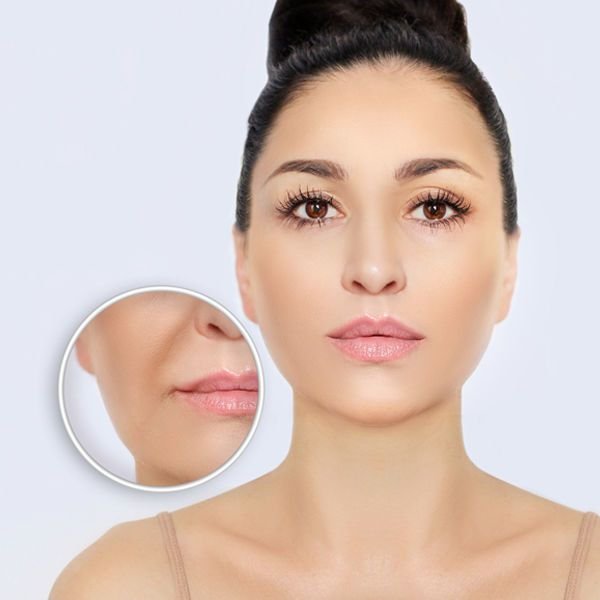
What Are Nasolabial Folds and Why Do They Deepen Over Time?
Nasolabial folds are the two lines that run from the sides of your nose down to the corners of your mouth. Most people call them smile lines or laugh lines. At a young age, these creases appear only when you smile and fade when your face relaxes. As the years pass, though, they stay visible even at rest, and they gradually grow deeper.
Several factors drive this change. First, the body produces less collagen and elastin with every passing year, which means the skin loses its natural firmness and bounce. Second, facial fat pads shift downward, removing the structural support that once kept the mid-face plump and lifted. Third, repeated facial expressions over decades etch these lines deeper into the skin. The result is a tired or aged appearance that does not reflect how you actually feel.
According to the American Academy of Dermatology, soft tissue fillers are among the most requested non-surgical cosmetic procedures precisely because they address this kind of volume-related aging quickly and effectively.
How Nasolabial Fold Filler Works
A nasolabial fold filler works by placing a gel-like substance beneath the skin along the smile line. This fills the hollow space created by lost volume and gently pushes the skin upward, softening the crease without surgery or significant recovery time.
Most fillers used for this area rely on hyaluronic acid (HA), a substance the body naturally produces. Hyaluronic acid attracts and holds moisture, which keeps the filler hydrated and helps it integrate smoothly with surrounding tissue. Because HA is biocompatible, the body accepts it well and reactions are rare when the product is authentic and properly formulated.
Some practitioners also choose calcium hydroxylapatite (CaHA) fillers, such as Radiesse, for deeper folds. CaHA provides structure and also stimulates the body to produce new collagen over time, which adds a longer-term benefit beyond immediate volume correction.
Results from a single treatment session typically appear right away. Most patients see their final outcome within a week once any minor swelling settles. Duration varies by product, but most HA fillers in the nasolabial area last between 9 and 18 months, while CaHA formulations often last up to 15 months or longer.

The Best Dermal Fillers for Smile Lines
Not every filler suits every area of the face. The nasolabial fold requires a product with the right balance of firmness for support and flexibility to move naturally with facial expressions. Below is a comparison of the top-performing fillers for this treatment area.
| Product | Key Ingredient | Best For | Approx. Duration |
|---|---|---|---|
| Juvederm Ultra/Ultra Plus | Hyaluronic Acid (VYCROSS) | Moderate to deep folds | 12–18 months |
| Restylane Lyft | Hyaluronic Acid (NASHA) | Structural lift, deep folds | 9–12 months |
| Radiesse | Calcium Hydroxylapatite | Deep folds, collagen boost | 12–15 months |
| Teosyal RHA 3 | Resilient Hyaluronic Acid | Dynamic expressions, natural look | 12–15 months |
| Belotero Balance | Hyaluronic Acid (CPM) | Superficial-to-medium lines | 6–12 months |
| Revanesse Versa | Hyaluronic Acid (THIXOFIX) | Natural volume, minimal swelling | 12 months |
Each of these brands carries a strong clinical record. Juvederm and Restylane hold FDA approval for nasolabial fold treatment specifically. Teosyal’s RHA range earns praise for its ability to adapt to facial movement, which makes it especially suited to active expressions. Radiesse stands apart for patients who want both immediate correction and longer-term collagen stimulation.
Smile Line Fillers vs. Marionette Lines Treatment: Understanding the Difference
Patients often ask whether smile line fillers and marionette lines treatment use the same products and technique. The short answer is yes and no.
Marionette lines run vertically from the corners of the mouth down toward the chin, creating a puppet-like appearance. Both nasolabial folds and marionette lines involve volume loss and skin laxity, so practitioners frequently treat them in the same session. The product choice often overlaps too, but injection depth and placement differ because the anatomy in each zone is distinct.
Treating both areas together delivers a more balanced, harmonious outcome. When only the smile lines receive filler, the uncorrected marionette lines create a contrast that draws attention to itself. A skilled practitioner assesses the whole lower face before deciding how much product to place in each zone.
Quick Comparison
- Nasolabial folds — Lines from nose to mouth corners, treated with mid-density HA or CaHA fillers
- Marionette lines — Lines from mouth corners to chin, often requiring a firmer filler placed more deeply
- Combined treatment — Provides a naturally refreshed result across the lower face
What to Expect During and After Treatment
A typical nasolabial fold filler session takes between 20 and 40 minutes. The practitioner cleans the skin, marks the injection sites, and applies a topical numbing cream. Many modern fillers also contain lidocaine within the formula, which reduces discomfort during the procedure itself.
Most patients return to their normal activities the same day. Temporary redness, mild swelling, or light bruising at the injection site usually resolves within two to five days. To get the best outcome, practitioners generally advise patients to avoid intense exercise, alcohol, and sun exposure for 24 to 48 hours after treatment.
The American Society of Plastic Surgeons notes that hyaluronic acid fillers carry the benefit of reversibility. If a patient dislikes the result or experiences a complication, a practitioner injects hyaluronidase, an enzyme that dissolves the filler rapidly.

Why Buying Authentic Face Fillers Matters
The market for face fillers has grown dramatically, and with that growth comes a serious concern: counterfeit or substandard products sold at suspiciously low prices. Fake fillers pose real health risks, including infection, granuloma formation, tissue necrosis, and permanent scarring. These outcomes are not rare with counterfeit products — they are well-documented.
Authentic fillers come from licensed manufacturers, travel through a verified cold chain, and carry proper batch documentation. When you buy from a trusted source, you receive a product that matches its label in concentration, sterility, and formulation. That consistency is the foundation of safe, predictable results.
Filler Supply Store sources all products directly from reputable manufacturers worldwide. Every item in the store comes with full documentation and ships according to a strict temperature-controlled shipment policy to preserve product integrity from warehouse to your door.
How to Buy Nasolabial Fold Filler Online Safely
Buying dermal fillers near me used to mean calling clinics or visiting distributors in person. Today, ordering online offers more convenience, wider product selection, and competitive pricing — as long as you follow a few key steps.
- Verify the supplier’s credentials. Look for a registered business, transparent contact information, and clear product sourcing policies.
- Check for genuine brand documentation. Authentic products carry manufacturer batch numbers that practitioners and suppliers trace back to origin.
- Confirm the cold-chain shipping standard. Hyaluronic acid fillers require temperature-controlled storage and transit.
- Review the return and customer service policy. A trustworthy supplier stands behind every order and responds to concerns promptly.
- Compare product options. A quality supplier stocks multiple brands so you select the filler that fits the treatment goal rather than settling for whatever is available.
The How To Buy page at Filler Supply Store walks you through the ordering process step by step. The store carries an extensive range of dermal fillers from top global brands, so licensed practitioners and aesthetic professionals always find the right product for each patient’s unique needs.
Choosing the Right Filler for Your Goals
Selecting a nasolabial fold filler is not a one-size-fits-all decision. The depth of the fold, the patient’s skin thickness, the desired degree of correction, and how long the result should last all influence product choice.
For mild to moderate folds with thinner skin, a softer HA filler such as Belotero Balance or Revanesse Versa works well because these products integrate seamlessly without adding too much bulk. For deeper, more pronounced folds, a firmer product like Juvederm Ultra Plus or Restylane Lyft provides the structural support needed to lift the overlying skin effectively.
Patients who want both a natural look and long duration often choose Teosyal RHA 3 for its resilient formula, which moves with facial expressions and avoids the stiff appearance that older filler technologies sometimes produced. Those seeking added collagen stimulation benefit from Radiesse, especially when the mid-face shows broader signs of volume depletion.
If choosing between options feels overwhelming, the Filler Supply Store team welcomes questions and guides practitioners toward the most suitable product for each case.
Ready to Smooth Your Smile Lines?
Browse our full range of authentic, clinician-trusted nasolabial fold fillers — shipped safely to your door.